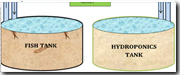
Comparison between Indian spinach production in aquaponics utilizing fish wastewater and hydroponics biogas slurry solution
DOI:
https://doi.org/10.17017/j.fish.1145Keywords:
aquaponics, hydroponics, Indian spinach, production, tilapiaAbstract
The experiment compared Indian spinach production in aquaponics utilizing fish wastewater and hydroponics with biogas slurry solution. The aquaponics system involved 60 juvenile tilapias, released into a 750 L tank with an average initial length and weight of 14.41 ± 0.66 cm and 49.81 ± 4.29 g, respectively. The fish were fed commercial pelleted feed twice daily and maintained suitable water quality parameters, including pH, temperature, and DO, within the required range. The hydroponics system used biogas slurry as nutrient media. In each system, 3 plant beds were used, and 4 Indian spinach plants were planted in each bed. Physical parameters of water indicated that the aquaponics system had higher levels of EC, HCO3, CO3, Total-N, potassium, sulphur, and sodium than the hydroponics system. After 90 days, aquaponics had the largest plant weight (82.05 ± 23.31 g), with significantly higher levels of nitrogen, potassium, and sulphur content (by 5.54%, 3.10%, and 0.61% respectively) in leaves was found in aquaponics, while the phosphorus (0.85%) was higher in hydroponics. The yield of Indian spinach was higher in aquaponics (2.88 kg m–2) than in hydroponics (1.52 kg m–2). Length gain of experimental fish in aquaponics was 10.54 ± 1.51 cm, weight gain 112.71 ± 21.75 g, with a percent weight gain of 227.23 ± 42.98, specific growth rate of 1.4 ± 0.16% day–1, which was normal. The study concluded that wastes from tilapia aquaponics are more suitable for Indian spinach cultivation than low-cost biogas slurry hydroponics.
Downloads
References
Abdelrahman AAM (2018) Effect of feeding frequency and stocking density on tilapia Oreochromis niloticus and lettuce Lactuca sativa production in aquaponics system under the UAE condition and business enterprise analysis. Biology Master's Theses, United Arab Emirates University, UAE.
Abdel-Tawwab M, Hagras AE, Elbaghdady HAM, Monier MN (2014) Dissolved oxygen level and stocking density effects on growth, feed utilization, physiology, and innate immunity of Nile tilapia, Oreochromis niloticus. Journal of Applied Aquaculture 26(4): 340–355.
Acharya S, Kumar K, Sharma N, Tiwari VK, Chaurasia OP (2021) Yield and quality attributes of lettuce and spinach grown in different hydroponic systems. Journal of Soil and Water Conservation 20(3): 342–349.
Aires A (2018) Hydroponic production systems: impact on nutritional status and bioactive compounds of fresh vegetables. InTech, UK.
Akter B, Chakraborty SC, Salam MA (2018) Aquaponic production of tilapia (Oreochromis niloticus) and water spinach (Ipomoea aquatica) in Bangladesh. Research in Agriculture Livestock and Fisheries 5(1): 93–106.
Akter MM, Islam MA, Hossain MM, Sultana N, Khanam JS, Basunia AK (2021) Performance of bio-slurry and inorganic fertilizer on growth, yield and quality of Indian spinach (Basella alba L.). Journal of Bangladesh Agricultural University 19(3): 287–293.
Ani JS, Manyala JO, Masese FO, Fitzsimmons K (2022) Effect of stocking density on growth performance of monosex Nile tilapia (Oreochromis niloticus) in the aquaponic system integrated with lettuce (Lactuca sativa). Aquaculture and Fisheries 7(3): 328–335.
Asao T (2012) Hydroponics - a standard methodology for plant biological researches. InTech, UK.
Atique F, Lindholm-Lehto P, Pirhonen J (2022) Is aquaponics beneficial in terms of fish and plant growth and water quality in comparison to separate recirculating aquaculture and hydroponic systems? Water 14(9): 1447.
Azad KN, Salam MA, Hossain MZ (2018) Performance evaluation of different bedding media in aquaponic system for growth and production of okra and tilapia. International Journal of Engineering Research & Science 4(9): 14–25.
Basunia A, Hossain M, Islam M, Akter M, Akter M (2020) Influence of bioslurry on the growth, yield and nutritional status of Indian spinach. Journal of Bangladesh Agricultural University 18(2): 343–351.
Bethe LA, Salam MA, Fatema UK, Rana KMS (2017) Effects of molasses and compost tea as foliar spray on water spinach (Ipomoea aquatica) in aquaponics system. International Journal of Fisheries and Aquatic Studies 5(3): 203–207.
Bishop M, Bourke S, Connolly K, Trebic T (2009) Baird’s village aquaponics project final report. McGill University, Bellairs Research Institute, Holetown, St. James, Barbados.
Boyd CE (1998) Water quality in ponds for aquaculture. Auburn University Press, Birmingham.
Delaide B, Goddek S, Lettelier A, Jijakli MH (2016) Lettuce (Lactuca sativa L. var. Sucrine) growth performance in complemented aquaponic solution outperforms hydroponics. Water 8(10): 467.
DeLong DP, Losordo TM, Rakocy JE (2009) Tank culture of tilapia. SRAC Publication.
Eck M, Körner O, Jijakli MH (2019) Nutrient cycling in aquaponics systems. In: Goddek S, Joyce A, Kotzen B, Burnell GM (Eds) Aquaponics Food Production Systems. Springer, Cham.
El-Sayed AFM, Kawanna M (2008) Optimum water temperature boosts the growth performance of Nile tilapia (Oreochromis niloticus) fry reared in a recycling system. Aquaculture Research 39: 670–672.
Endut A, Jusoh A, Ali N (2014) Nitrogen budget and effluent nitrogen components in aquaponics recirculation system. Desalination and Water Treatment 52: 744–7522.
Estim A, Saufie S, Mustafa S (2019) Water quality remediation using aquaponics sub-systems as biological and mechanical filters in aquaculture. Journal of Water Process Engineering 30: 100566.
Goddek S, Delaide B, Mankasingh U, Ragnarsdottir KV, Jijakli H, Thorarinsdottir R (2015) Challenges of sustainable and commercial aquaponics. Sustainability 7(4): 4199–4224.
GraphPad Prism for Windows (2024). www.graphpad.com.
Henson MN, Aday DD, Rice JA (2018) Thermal tolerance and survival of nile tilapia and blue tilapia under rapid and natural temperature declination rates. Transactions of the American Fisheries Society 147(2): 278–286.
Hong-xin T, Guo-zhi L, Xue-bao Z, Yu-ji Q, Zhi-ming Y (2001) Effect of hydroponic vegetables on water quality purification of aquaculture waste water. Journal of Shanghai Ocean University 10(4): 293–297.
Hossain MA, Ashraful, Akhter T, Sadia MA, Akter T, Habib KA (2022) Optimization of planting density of Indian spinach in a recirculating aquaponics system using Nile tilapia. Pakistan Journal of Scientific and Industrial Research 65(1): 18–27.
Hossain MB, Sultana N, Noor P, Khan S, Lisa SA, … Rahman MS (2017) Growth performance and fatty acid profile of Nile tilapia Oreochromis niloticus (Linnaeus, 1758) fed with different phytoplankton. Dhaka University Journal of Biological Sciences 26(1): 13–27.
Hossain N, Islam M, Alamgir M, Kibria MG (2014) Growth response of Indian spinach to biogas plant residues. IORS Journal of Pharmacy and Biological Sciences 9(2): 01–06.
Hu Z, Lee JW, Chandran K, Kim S, Brotto AC, Khanal, SK (2015) Effect of plant species on nitrogen recovery in aquaponics. Bioresource Technology 188: 92–98.
Jana BB, Sarkar D (2005) Water quality in aquaculture - impact and management: a review. The Indian Journal of Animal Sciences 75(11): 1354–1361.
Jensen MH (1999) Hydroponics worldwide. Acta Horticulturae 481: 719–730.
Johanson EK (2009) Aquaponics and hydroponics on a budget. Tech Directions 69(2): 21–23.
Kang Q, Zhao J, Zhu P, Gong Q, Wang L, Li Z (2020) The growth characteristics of three terrestrial plants cultivated with biogas slurry as a hydroponic medium. American Journal of Plant Sciences 11(6): 819–831.
Kumar A (2013) Ethnobotanical study of wild vegetables used by rural communities of Kannauj district, Uttar Pradesh, India. Emirates Journal of Food and Agriculture 25(10): 760–766.
Kumar S (2021) Just about everything you need to know about Indian spinach. Pacific Island Farmers Organisation Network. www.pacificfarmers.com, accessed on 10 August 2025.
Kumar S, Malav LC, Malav MK, Khan SA (2015) Biogas slurry: source of nutrients for eco-friendly agriculture. International Journal of Extensive Research 2: 42–46.
Lama SL, Marcelino KR, Wongkiew S, Surendra KC, Hu Z, … Khanal SK (2025) Recent advances in aquaponic systems: a critical review. Reviews in Aquaculture 17(3): e70029.
Liang F, Shi Z, Wei S, Yan S (2023) Biogas slurry purification-lettuce growth nexus: nutrients absorption and pollutants removal. Science of The Total Environment 890: 164383.
Liang F, Xu L, Ji L, He Q, Wu L, Yan S (2021) A new approach for biogas slurry disposal by adopting CO2-rich biogas slurry as the flower fertilizer of Spathiphyllum: feasibility, cost and environmental pollution potential. Science of The Total Environment 770: 145333.
Liu WK, Yang QC, Du LF, Cheng RF, Zhou WL (2011) Nutrient supplementation increased growth and nitrate concentration of lettuce cultivated hydroponically with biogas slurry. Acta Agriculturae Scandinavica, Section B — Soil & Plant Science 61(5): 391–394.
Mannzhi MP, Edokpayi JN, Durowoju OS, Gumbo J, Odiyo JO (2021) Assessment of selected trace metals in fish feeds, pond water and edible muscles of Oreochromis mossambicus and the evaluation of human health risk associated with its consumption in Vhembe district of Limpopo Province, South Africa. Toxicology Reports 8: 705–717.
Mishra U, Ghodichore N, Jethwa K, Ray MR, Singh AN (2024) Fish and plant growth in aquaponic and its water quality parameter. Research Journal of Agricultural Sciences 15(3): 661–664.
Nadia ZM, Roy P, Salam MA (2020) Production potential of broccoli (Brassica oleracea var. italica) in hydroponics and tilapia based aquaponics. Journal of Bangladesh Agricultural University 18(3): 768–778.
Nehemia A, Maganira J (2012) Length-Weight relationship and condition factor of tilapia species grown in marine and fresh water ponds. Agriculture and Biology Journal of North America 3(3): 117–124.
Nivelle R, Gennotte V, Kalala EJK, Ngoc NB, Muller M, … Rougeot C (2019) Temperature preference of Nile tilapia (Oreochromis niloticus) juveniles induces spontaneous sex reversal. PLOS ONE 14(3): e0214689.
Omasaki SK, Janssen K, Besson M, Komen H (2017) Economic values of growth rate, feed intake, feed conversion ratio, mortality and uniformity for Nile tilapia. Aquaculture 481: 124–132.
Pantanella E, Cardarelli M, Colla G, Rea E, Marcucci A (2012) Aquaponics vs. hydroponics: production and quality of lettuce crop. In: Acta Horticulturae 927: 887–893.
Rahaman MA, Zhang Q, Shi Y, Zhan X, Li G (2021) Biogas slurry application could potentially reduce N2O emissions and increase crop yield. Science of The Total Environment 778: 146269.
Rahmatullah R, Das M, Rahmatullah SM (2010) Suitable stocking density of tilapia in an aquaponic system. Bangladesh Journal of Fisheries Research 14(2): 29–35.
Rakocy JE (1989) Tank culture of tilapia. SRAC Publication.
Rakocy JE (2012) Aquaponics—integrating fish and plant culture. In: Tidwell JH (Ed) Aquaculture Production Systems. Wiley p. 344–386.
Rakocy JE, Bailey DS, Shultz KA, Cole WM (1997) Evaluation of a commercial-scale aquaponic unit for the production of tilapia and lettuce. University of the Virgin Islands. p. 1–15.
Rakocy JE, Bailey DS, Shultz RC, Thoman ES (2004) Update on tilapia and vegetable production in the UVI aquaponic system. University of the Virgin Islands, USA. p. 1–15.
Rakocy JE, Masser MP, Losordo TM (2006) Recirculating aquaculture tank production systems: aquaponics- integrating fish and plant culture. SRAC Publication No. 454.
Ramaiyan B, Kour J, Nayik GA, Anand N, Alam MS (2020) Spinach (Spinacia oleracea L.). In: Nayik, GA, Gull A (Eds) Antioxidants in vegetables and nuts - properties and health benefits. Springer, Singapore. p. 159–173.
Resh HM (2022) Hydroponic food production, eighth edition. CRC Press.
Rezvi MR (2018) The factors of declining agricultural growth in Bangladesh and its impact on food security. South Asian Journal of Social Studies and Economics 1(4): 1–9
Richard LA (1954) Diagnosis and improvement of saline and alkali soils. US Department of Agriculture. Agricultural Handbook No. 60, Washington DC. p. 7–53.
Romana-Eguia M, Laron M, Catacutan M (2013) On-farm feed management practices for Nile tilapia (Oreochromis niloticus) in the Philippines. In: FAO fisheries and aquaculture technical paper No 583: 131–158.
Roy M, Salam MA, Hossain MB, Shamsuddin M (2013) Feasibility study of aquaponics in polyculture pond. World Applied Sciences Journal 23(5): 588–592.
Salam MA, Asadujjaman M, Rahman MS (2013) Aquaponics for improving high density fish pond water quality through raft and rack vegetable production. World Journal of Fish and Marine Sciences 5(3): 251–256.
Salam MA, Islam T, Nadia ZM (2020) Tilapia powered aquaponics to optimize land and water use for safe food production from the rooftop. International Journal of Engineering Research & Science 6(5): 27–36.
Salam MA, Jahan N, Hashem S, Rana KMS (2014) Feasibility of tomato production in aquaponic system using different substrates. Progressive Agriculture 25: 54–62.
Salam MA, Prodhan MY, Sayem SM, Islam MA (2014) Comparative growth performances of taro plant in aquaponics vs other systems. International Journal of Innovation and Applied Studies 7(3): 941–946.
Sayara T, Amarneh B, Saleh T, Aslan K, Abuhanish R, Jawabreh A (2016) Hydroponic and aquaponic systems for sustainable agriculture and environment. International Journal of Plant Science and Ecology 2(3): 23–29.
Shete AP, Verma AK, Tandel RS, Prakash C, Tiwari VK, Hussain T (2013) Optimization of water circulation period for the culture of goldfish with spinach in aquaponic system. Journal of Agricultural Science 5(4): 26–30.
Singh A, Dubey PK, Chaurasiya R, Mathur N, Kumar G, … Abhilash PC (2018) Indian spinach: an underutilized perennial leafy vegetable for nutritional security in developing world. Energy, Ecology and Environment 3: 195–205.
Stone NM, Thomforde HK (2004) Understanding your fish pond water analysis report. University of Arkansas Cooperative Extension Service Printing Services.
Subramanian R (2020) A pilot study on the lettuce and cucumber mixed cultivation in a recirculated aquaponics system. Innovations in Agriculture 3: 1–6.
Sunagar VB, Kattimani PA, Padasali VA, Hiremath NV (2014) Estimation of nitrogen content in leaves using image processing. In: Proceedings of International Conference on Advances in Engineering & Technology. Goa, India. p. 25–28.
Tabatabai MA, Bremner JM (1970) An alkaline oxidation method for determination of total sulfur in soils. Soil Science Society of America Journal 34(1): 62–65.
Verma DK, Maurya NK, Kumar P (2022) Important water quality parameters in aquaculture: an overview. Agriculture & Environment 3(3): 24–29.
Walton NRG (1989) Electrical conductivity and total dissolved solids—what is their precise relationship? Desalination 72(3): 275–292.
Wang L, Guo S, Wang Y, Yi D, Wang J (2019) Poultry biogas slurry can partially substitute for mineral fertilizers in hydroponic lettuce production. Environmental Science and Pollution Research 26: 659–671.
Wolf B (1982) A comprehensive system of leaf analyses and its use for diagnosing crop nutrient status. Communications in Soil Science and Plant Analysis 13(12): 1035–1059.
Wongkiew S, Hu Z, Chandran K, Lee JW, Khanal S K (2017) Nitrogen transformations in aquaponic systems: a reveiw. Aquacultural Engineering, 76: 9–19.
Yang T, Kim H-J (2020) Comparisons of nitrogen and phosphorus mass balance for tomato-, basil-, and lettuce-based aquaponic and hydroponic systems. Journal of Cleaner Production 274: 122619.