Antimicrobial resistance and phage sensitivity of Chryseobacterium sp. isolated from diseased rainbow trout (Oncorhynchus mykiss)
DOI:
https://doi.org/10.17017/j.fish.1165Keywords:
aquaculture, bacteriophage, Chryseobacterium sp., phage therapyAbstract
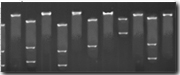
This study aimed to isolate and characterize bacteriophages infecting Chryseobacterium sp., an opportunistic pathogen responsible for considerable mortality in rainbow trout (Oncorhynchus mykiss Walbaum, 1792) aquaculture. Chryseobacterium isolates were recovered from diseased trout collected from aquaculture facilities in Mersin and Van (Türkiye) using Anacker–Ordal medium. Identification was performed through API 20E/20ZYM biochemical profiling and 16S rRNA gene sequencing. Antibiotic susceptibility was evaluated by the Kirby–Bauer disk diffusion method following CLSI and EUCAST guidelines. Phages were isolated from water samples via 0.22 μm filtration and purified using the double-layer agar method. Antimicrobial susceptibility testing revealed that Chryseobacterium isolates were sensitive to enrofloxacin, oxolinic acid, and ciprofloxacin, but exhibited pronounced resistance to most β-lactam and aminoglycoside antibiotics. A total of 19 lytic phages (CV1 – CV19) were successfully isolated. They displayed latent periods between 2.5 and 7.5 h and burst sizes ranging from 20 to 235 PFU per cell. The highest burst size and shortest latent period were recorded for the CV5 phage. Adsorption rate constants showed phage-specific variability, with overall values ranging from 1.05×10⁻⁶ to 2.55×10⁻⁶ mL·min⁻¹. Genome sizes were estimated at 48 – 75 kb. TEM revealed typical tailed morphologies consistent with the order Caudovirales. Host range assays showed strong species specificity, with limited cross-activity against Flavobacterium psychrophilum and Enterococcus faecalis. The findings confirm that these phages possess traits favorable for use as eco-friendly biocontrol agents, offering a promising strategy to mitigate Chryseobacterium-associated infections and reduce antibiotic dependence in trout hatcheries.
Downloads
References
Castillo D, Higuera G, Villa M, Middelboe M, Dalsgaard I, … Espejo RT (2012) Diversity of Flavobacterium psychrophilum and the potential use of its phages for protection against bacterial cold-water disease in salmonids. Journal of Fish Diseases 35(3): 193–201.
Castillo D, Højsting AR, Roosvall A, Smyrlis G, Jørgensen J, Middelboe M (2022) In vitro evolution of specific phages infecting the fish pathogen Flavobacterium psychrophilum. Phage 3(1): 28–37.
Clinical and Laboratory Standards Institute (CLSI) (2014) Performance standards for antimicrobial susceptibility testing of bacteria isolated from aquatic animals. CLSI document VET03/04-S2, Wayne, PA.
De Schryver P, Defoirdt T, Boon N, Verstraete W, Bossier P (2012) Managing the microbiota in aquaculture systems for disease prevention and control. In: Handbook of microalgal culture. Woodhead Cambridge, UK.
Donati VL, Dalsgaard I, Sundell K, Castillo D, Er-Rafik M, … Madsen L (2021) Phage-mediated control of Flavobacterium psychrophilum in aquaculture: in vivo experiments to compare delivery methods. Frontiers in Microbiology 543: 736946.
European Committee on Antimicrobial Susceptibility Testing (EUCAST) (2019) Zone diameter breakpoints for rapid antimicrobial susceptibility testing. Version 1.1.
Fiedler AW, Gundersen MS, Vo TP, Almaas E, Vadstein O, Bakke I (2023) Phage therapy minimally affects the water microbiota in an Atlantic salmon (Salmo salar) rearing system while still preventing infection. Scientific Reports 13: 19145.
Fister S, Robben C, Witte AK, Schoder D, Wagner M, Rossmanith P (2016) Influence of environmental factors on phage–bacteria interaction. Frontiers in Microbiology 7: 1152.
Gümüştaş A (2015) Laktik Asit Bakterileri ve Bakteriyofajlarının Çeşitli Kaynaklardan İzolasyonu ve Karakterizasyonu. Yüksek Lisans Tezi, Ankara Üniversitesi (in Turkish).
Huang C (2025) Clinical and Epidemiological features and antimicrobial susceptibility patterns of Chryseobacterium species: a scoping review. Medicina 61(7): 1197.
Izaguirre-Anariba DE, Sivapalan V (2020) Chryseobacterium indologenes, an emerging bacteria: a case report and review of literature. Cureus 12(2): e7000.
Kämpfer P, Busse HJ, McInroy JA, Glaeser SP (2015) Chryseobacterium sediminis sp. nov., isolated from a river sediment. International Journal Systematic and Evolutionary Microbiology 65: 3147–3153.
Kunttu HMT, Runtuvuori-Salmela A, Sundell K, Wiklund T, Middelboe M, … Sundberg LR (2021) Bacteriophage resistance affects Flavobacterium columnare virulence partly via mutations in genes related to gliding motility and the type IX secretion system. Applied and Environmental Microbiology 87: e00812-21.
Laanto E, Bamford JKH, Ravantti JJ, Sundberg LR (2015) The use of phage FCL-2 as an alternative to chemotherapy against columnaris disease in aquaculture. Frontiers in Microbiology 6: 829.
Laanto E, Hoikkala V, Ravantti J, Sundberg LR (2017) Long-term genomic coevolution of host–parasite interaction in natural environments. Nature Communications 8: 111.
Li M, Cai Y, Tian Y, Ke X, Zhao Z, … Wang S (2025) First isolation of Chryseobacterium sp. as a pathogen of fish eggs. Aquaculture Reports 43: 102992.
Loch TP, Faisal M (2014) Chryseobacterium aahli sp. nov., isolated from lake trout (Salvelinus namaycush) and brown trout (Salmo trutta), and emended descriptions of Chryseobacterium ginsenosidimutans and Chryseobacterium gregarium. International Journal of Systematic and Evolutionary Microbiology 64: 2985–2993.
Mallik SK, Pathak R, Shahi N, Kala K, Chandra S, … Pandey PK (2023) Pathological analysis and antimicrobial susceptibility of Chryseobacterium balustinum RTFCP 298 isolated from diseased rainbow trout, Oncorhynchus mykiss. Scientific Reports 13, 13268.
Michel C, Matte-Tailliez O, Kerouault B, Bernardet JF (2005) Resistance pattern and assessment of phenicol agents’ minimum inhibitory concentration in multidrug resistant Chryseobacterium isolates from fish and aquatic habitats. Journal of Applied Microbiology 99: 1210–1216.
Mohammed EAH, Kovács B, Kuunya R, Mustafa EOA, Abbo ASH, Pál K (2025) Antibiotic resistance in aquaculture: challenges, trends analysis, and alternative approaches. Antibiotics 14(6): 598.
Nhung TTT, Verma S, Ponne S, Meghwanshi GK, Schön T, Kumar R (2025) Bacteriophage-based strategies for biocontrol and treatment of infectious diseases. Computational and Structural Biotechnology Journal 27: 2924-2932.
Oosthuizen L (2018) Taxonomy, growth and food spoilage characteristics of a novel Chryseobacterium species. MSc Thesis, Department of Microbial, Biochemical and Food Biotechnology, Faculty of Natural and Agricultural Sciences, University of the Free State, South Africa.
Rosado D, Xavier R, Severino R, Tavares F, Cable J, Pérez-Losada M (2019) Effects of disease, antibiotic treatment and recovery trajectory on the microbiome of farmed seabass (Dicentrarchus labrax). Sci Rep 9: Article 55314.
Saticioglu I B, Duman M, Altun S (2021) Genome analysis and antimicrobial resistance characteristics of Chryseobacterium aquaticum isolated from farmed salmonids. Aquaculture 535: 736364.
Saticioglu IB, Duman M, Smith P, Wiklund T, Altun S (2019) Antimicrobial resistance and resistance genes in Flavobacterium psychrophilum isolates from Turkey. Aquaculture 512: 734293.
Stenholm AR, Dalsgaard I, Middelboe M (2008) Isolation and characterization of bacteriophages infecting Flavobacterium psychrophilum. Applied and Environmental Microbiology 74(13): 4070–4078.
Stephen J, Mukherjee S, Lekshmi M, Kumar S (2023) Diseases and antimicrobial use in aquaculture. In: Mothadaka MP, Vaiyapuri M, Rao Badireddy M, Nagarajrao Ravishankar C, Bhatia R, Jena J (Eds) Handbook on Antimicrobial Resistance. Springer, Singapore
Sundell K, Landor L, Castillo D, Middelboe M, Wiklund T (2020) Bacteriophages as biocontrol agents for Flavobacterium psychrophilum biofilms and rainbow trout infections. Phage 1(4): 198–204.
Üstündağ M (2025) Phage therapy in aquaculture: applications, efficacy and challenges. MEMBA Water Sciences Journal 11(2): 182–200.
Wang C, Chuprom J, Wang Y, Fu L (2020) Beneficial bacteria for aquaculture: nutrition, bacteriostasis and immunoregulation. Journal of Applied Microbiology
Wang Y, Barton M, Elliott L, Li X, Abraham S, … Munro J (2017) Bacteriophage therapy for the control of Vibrio harveyi in greenlip abalone (Haliotis laevigata). Aquaculture 473: 251–258.
Wommack KE, Colwell RR (2000) Virioplankton: viruses in aquatic ecosystems. Microbiology and Molecular Biology Reviews 64(1): 69–114.
Yıldızlı G, Coral MNU, Coral G, Yılmaz SN (2022) Isolation and characterization of lytic bacteriophages infecting Vibrio sp. strains. Advances in Bioresearch 13(5): 1–10.
Zou H, Ding Y, Shang J, Ma C, Li J, … Wei Y (2023) Isolation, characterization and genomic analysis of a novel bacteriophage MA9V-1 infecting Chryseobacterium indologenes: a pathogen of Panax notoginseng root rot. Frontiers in Microbiology 14: 1251211.