Biosafety and cellular cytocompatibility assessment of endotoxin-reduced Flavobacterium psychrophilum bacteriophages
DOI:
https://doi.org/10.17017/j.fish.1220Keywords:
bacteriophage therapy, cytocompatibility, endotoxin reduction, Flavobacterium psychrophilum, MTTAbstract
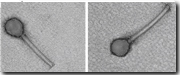
Flavobacterium psychrophilum causes bacterial cold-water disease in salmonids, leading to substantial losses in juvenile rainbow trout aquaculture. Although bacteriophages represent promising antibiotic alternatives, biosafety concerns persist due to endotoxin contamination originating from Gram-negative hosts. In this study, five lytic phages (FpV30–FpV34) were isolated from trout hatchery effluent using F. psychrophilum ATCC 49418 and characterized by one-step growth, adsorption assays, host range analysis, and transmission electron microscopy (TEM). Phages exhibited adsorption constants between 1.21×10⁻⁹ and 1.58×10⁻⁶ mL·min⁻¹, latent periods of 3–6.5 h, and burst sizes of 11–34.5 particles per cell. Spot tests demonstrated high specificity toward F. psychrophilum, with negligible activity against non-target bacteria. TEM revealed icosahedral capsids (≈75–83 nm) and long tails (≈129–142 nm), consistent with Myoviridae-like morphology. Crude lysates were purified by PEG/NaCl precipitation followed by dialysis, resulting in a ~40-fold increase in phage titer (from 1×10⁸ to 4×10⁹ PFU mL–1) and a 99.8% reduction in endotoxin levels (from 1.2×10³ to 2.3 EU mL–1), confirmed by chromogenic LAL assay with interference control. Cellular cytocompatibility assessed in MCF-7 cells revealed that crude preparations reduced viability to 58% at 48 h, whereas endotoxin-reduced phages maintained >90% viability. These findings demonstrate that PEG/NaCl-based purification enables high-titer, low-endotoxin F. psychrophilum phage preparations with favorable cytocompatibility, supporting their biosafe application in aquaculture.
Downloads
References
Aly SM, Fathi M (2024) Advancing aquaculture biosecurity: a scientometric analysis and future outlook for disease prevention and environmental sustainability. Aquaculture International 32: 8763–8789.
Ansari F, Nagar V (2024) Aeromonas biocontrol using bacteriophages: a promising strategy. IntechOpen.
Bonilla N, Rojas MI, Cruz GNF, Hung SH, Rohwer F, Barr JJ (2016) Phage on tap – a quick and efficient protocol for the preparation of bacteriophage laboratory stocks. PeerJ 4: e2261.
Bruttin A, Brüssow H (2005) Human volunteers receiving Escherichia coli phage T4 orally: a safety test of phage therapy. Antimicrobial Agents and Chemotherapy 49(7): 2874–2878.
Castillo D, Johanna J, Sundell K, Madsen L, Inger D, … Middelboe M (2021) Genome-informed approach to identify genetic determinants of Flavobacterium psychrophilum phage susceptibility. Environmental Microbiology 23(8): 4185–4198.
Clokie MRJ, Millard AD, Letarov AV, Heaphy S (2011) Phages in nature. Bacteriophage 1(1): 31–45.
Cooper C, Mirzaei MK, Nilsson A (2016) Adapting drug approval pathways for bacteriophage-based therapeutics. Frontiers in Microbiology 7: 1209.
Donati V (2021) Bacteriophage-based control of Flavobacterium psychrophilum in rainbow trout. PhD thesis, Technical University of Denmark, Denmark.
Donati V, Madsen L, Middelboe M, Strube ML, Dalsgaard I (2022) The gut microbiota of healthy and Flavobacterium psychrophilum-infected rainbow trout fry is shaped by antibiotics and phage therapies. Frontiers in Microbiology 13: 771296.
Helmy YA, Taha-Abdelaziz K, Hawwas HAEH, Ghosh S, Alkafaas SS, … Mawad AMM (2023) Antimicrobial resistance and recent alternatives to antibiotics for the control of bacterial pathogens with an emphasis on foodborne pathogens. Antibiotics 12(2): 274.
Henein AE, Hanlon GW, Cooper C, Denyer SP, Maillard J (2016) A partially purified Acinetobacter baumannii phage preparation exhibits no cytotoxicity in 3T3 mouse fibroblast cells. Frontiers in Microbiology 7: 1198.
Henry KA, Arbabi-Ghahroudi M, Scott JK (2015) Beyond phage display: non-traditional applications of the filamentous bacteriophage as a vaccine carrier, therapeutic biologic, and bioconjugation scaffold. Frontiers in Microbiology 6: 755.
Hoare R, Ngo TPH, Bartie KL, Adams A (2017) Efficacy of a polyvalent immersion vaccine against Flavobacterium psychrophilum and evaluation of immune response to vaccination in rainbow trout fry (Onchorynchus mykiss L.). Veterinary Research 48(1): 43.
Hyman P, Abedon ST (2009) Practical methods for determining phage growth parameters. Methods in Molecular Biology 501: 175–202.
Jurczak-Kurek A, Gasior T, Nejman-Faleńczyk B, Bloch S, Dydecka A, … Wegrzyn A (2016) Biodiversity of bacteriophages: morphological and biological properties of a large group of phages isolated from urban sewage. Scientific Reports 6: 34338.
Lallo GD, Evangelisti M, Mancuso FM, Ferrante P, Marcelletti S, … Thaller MC (2014) Isolation and partial characterization of bacteriophages infecting Pseudomonas syringae pv. actinidiae, causal agent of kiwifruit bacterial canker. Journal of Basic Microbiology 54(11): 1210–1221.
Mamat U, Wilke K, Bramhill D, Schromm AB, Lindner B, … Woodard RW (2015) Detoxifying Escherichia coli for endotoxin-free production of recombinant proteins. Microbial Cell Factories 14(1): 57.
Melo LDR, Ferreira R, Costa AR, Oliveira H, Azeredo J (2019) Efficacy and safety assessment of two enterococci phages in an in vitro biofilm wound model. Scientific Reports 9(1): 6643.
Moldovan R, Chapman-McQuiston E, Wu XL (2007) On kinetics of phage adsorption. Biophysical Journal 93(1): 303–315.
Molina F, Simancas A, Tabla R, Gómez A, Roa I, Rebollo JE (2020) Diversity and local coadaptation of Escherichia coli and coliphages. Frontiers in Microbiology 11: 564522.
Mutai I, Juma AA, Inyimili MI, Nyachieo A, Nyamache AK (2022) Efficacy of diversely isolated lytic phages against multi-drug resistant Enterobacter cloacae isolates in Kenya. African Journal of Laboratory Medicine 11(1): a1673.
Romero J, Gloria C, Navarrete P (2012) Antibiotics in aquaculture – use, abuse and alternatives. In: InTech (Ed) Antibiotics in Aquaculture. InTech Open.
Salah ASM, Hassan LA, Fathallaa F, Al-Ghobashy MA, Nebsen M (2022) Preparation and characterization of polymyxin B- and histidine-coupled magnetic nanoparticles for purification of biologics from acquired endotoxin contamination. Beni-Suef University Journal of Basic and Applied Sciences 11(1): 53.
Smulders S, Kaiser J, Zuin S, Landuyt KV, Golanski L, … Hoet P (2012) Contamination of nanoparticles by endotoxin: evaluation of different test methods. Particle and Fibre Toxicology 9(1): 41.
Soule HD, Vazguez J, Long A, Albert S, Brennan M (1973) A human cell line from a pleural effusion derived from a breast carcinoma. Journal of the National Cancer Institute 51(5): 1409–1416.
Stenholm AR, Dalsgaard I, Middelboe M (2008) Isolation and characterization of bacteriophages infecting the fish pathogen Flavobacterium psychrophilum. Applied and Environmental Microbiology 74(13): 4070–4078.
Szermer-Olearnik B, Boratyński J (2015) Removal of endotoxins from bacteriophage preparations by extraction with organic solvents. PLoS ONE 10(3): e0122672.
Taghavifar SM, Sabbaghfarshi S, Samadikhah H, Tackallou SH, Ahmadi SF (2025) Restoring apoptosis in breast cancer via peptide mediated disruption of survivin IAP interaction. Scientific Reports 15(1): 40947.
Trend S, Chang BJ, O’Dea M, Stick SM, Kicic A, … Arest CF (2018) Use of a primary epithelial cell screening tool to investigate phage therapy in cystic fibrosis. Frontiers in Pharmacology 9: 1330.
Ustundag M, Ustundag B (2026) Antimicrobial resistance and phage sensitivity of Chryseobacterium sp. isolated from diseased rainbow trout (Oncorhynchus mykiss). Journal of Fisheries 14(1): 141207.
Van Belleghem JD, Dąbrowska K, Vaneechoutte M, Barr JJ, Bollyky PL (2019) Interactions between bacteriophage, bacteria, and the mammalian immune system. Viruses 11(1): 10.
Zeybek Z, Kebabcı Ç, Bugan I, Akbaş F (2023) Inhibition effect of cell-free supernatants of environmental Acanthamoeba strains on the viability of metastatic cell-lines. Mikrobiyoloji Bülteni 57(2): 282–293.