Effects of dietary supplementation of peppermint (Mentha piperita) on growth, survival and haemato-biochemical profile of common carp (Cyprinus carpio) fingerlings
DOI:
https://doi.org/10.17017/j.fish.1152Keywords:
Cyprinus carpio, growth parameters, haemato-biological parameters, Mentha piperitaAbstract
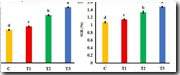
Herbal feed additives are increasingly explored in aquaculture as natural alternatives to synthetic growth promoters and immunostimulants. Peppermint (Mentha piperita), known for its bioactive phytochemicals and antioxidant properties, has shown potential benefits for fish health and metabolism. A 60-day feeding trial was conducted using 120 fingerlings (initial mean weight: 10.2±0.02 g; length: 9.63±0.03 cm) randomly distributed into four experimental groups, each with three replicates, following a completely randomized design. Experimental diets were prepared by incorporating peppermint leaf powder at 0% (control), 1%, 2%, and 3% per kg of feed weight (designated as T1, T2, and T3, respectively). After 60 days, fish fed the diet containing 3% peppermint (T3) exhibited significantly higher (p < 0.05) weight gain, protein efficiency ratio, average daily growth, and specific growth rate compared to other treatments. A significant increase (p < 0.05) in white blood cell (WBC) count was also recorded in the T3 group, indicating enhanced immune response. No significant differences were observed in red blood cell count, haemoglobin, packed cell volume, platelets, lymphocytes, monocytes, mean corpuscular hemoglobin concentration, mean corpuscular hemoglobin, or mean corpuscular volume among treatments. No mortality was observed in any group throughout the experimental period. Overall, dietary supplementation with 3% peppermint leaf powder improved growth performance, stimulated immune function, and maintained normal hematobiochemical parameters in common carp, supporting its potential as a safe and effective natural additive in sustainable aquaculture.
Downloads
References
Abdel-Tawwab M, Khalil RH, Diab AM, Khallaf MA, Abdel-Razek N, ... Khalifa E (2021) Dietary garlic and chitosan enhanced the antioxidant capacity, immunity, and modulated the transcription of HSP70 and Cytokine genes in Zearalenone-intoxicated European seabass. Fish & Shellfish Immunology 113: 35–41.
Abou Zaid AA, Mohammed NH, Elshafey AE, Hussein EE, El-Gamal AM, Abo-Al-Ela HG (2025) Mentha piperita supplementation promotes growth, immunity, and disease resistance in Nile tilapia against Aeromonas hydrophila. Pathogens 14(4): 378.
Adel M, Amiri AA, Zorriehzahra J, Nematolahi A, Esteban MÁ (2015) Effects of dietary peppermint (Mentha piperita) on growth performance, chemical body composition and hematological and immune parameters of fry Caspian white fish (Rutilus frisii kutum). Fish & Shellfish Immunology 45(2): 841–847.
AOAC (2005) Official methods of analysis of the Association of Official Analytical Chemists. 16th edition, Association of Official Analytical Chemists, Arlington, VA, USA.
APHA (2005) Standard methods for the examination of water and wastewater, 21th edition. American Public Health Association, Washington DC.
Balakrishnan A (2015) Therapeutic uses of peppermint-a review. Journal of Pharmaceutical Sciences and Research 7(7): 474.
Barad RR, Verma DK, Yusufzai SI, Shrivastava V, Ram AR (2024) Herbal feed additives: natural boost for aquatic health and growth (pp. 405–431). In: Sustainable feed ingredients and additives for aquaculture farming: perspectives from Africa and Asia. Springer Nature Singapore, Singapore.
Bhatnagar A, Garg SK (2000) Causative factors of fish mortality in still water fish pond under sub-tropical conditions. Aquaculture 1(2): 91–96.
Bhatnagar A, Saluja S (2019) Effect of dietary administration of mineral mixture containing amino acid tryptophan and vitamins for growth performance and immunity of Catla catla (Hamilton, 1822). Agricultural Science Digest-A Research Journal 39(2): 156–162.
Boyd CE (1982) Water quality management for pond fish culture. Scientific Publishing Co. Elsevier.
Boyd CE, Lichthoppler F (1979) Water quality management in fish pond culture research and development series no. 22. International Centre for Aquacultural Experimentation. Auburn Alabama: Auburn University. pp. 183.
Cao Y, Wang D, Wang L, Wei X, Li X, ... Yao J (2021) Physically effective neutral detergent fiber improves chewing activity, rumen fermentation, plasma metabolites, and milk production in lactating dairy cows fed a high-concentrate diet. Journal of Dairy Science 104(5): 5631–5642.
Citarasu T (2010) Herbal biomedicines: a new opportunity for aquaculture industry. Aquaculture International 18(3): 403–414.
Dawood MA, El Basuini MF, Yilmaz S, Abdel-Latif HM, Alagawany M, ... Van Doan H (2022) Exploring the roles of dietary herbal essential oils in aquaculture: a review. Animals 12(7): 823.
Elashry MA, Mohammady EY, Soaudy MR, Ali MM, El-Garhy HS, ... Hassaan MS (2024) Growth, health, and immune status of Nile tilapia Oreochromis niloticus cultured at different stocking rates and fed algal β-carotene. Aquaculture Reports 35: 101987.
FAO (2014) The state of world fisheries and aquaculture. Food and agriculture organization of the United Nations, Rome.
FAO (2022) The state of world fisheries and aquaculture. Food and agriculture organization of the United Nations, Rome.
Gholamipourfard K, Salehi M, Banchio E (2021) Mentha piperita phytochemicals in agriculture, food industry and medicine: features and applications. South African Journal of Botany 141: 183–195.
Hassan HU, Ali A, Al Sulivany BS, Bilal M, Kanwal R, ... Rasdi NW (2025) Investigation of the effects of phytogenic dietary additives on growth performance, nutrient utilization, economic efficiency and health of Pangasius hypophthalmus: implications for sustainable aquaculture development. Scientific Reports 15(1): 22661.
Hosoda K, Nishida T, Park WY, Eruden B (2005) Influence of Mentha piperita L. (peppermint) supplementation on nutrient digestibility and energy metabolism in lactating dairy cows. Asian-australasian Journal of Animal Sciences 18(12): 1721–1726.
Hudz N, Kobylinska L, Pokajewicz K, Horčinová Sedláčková V, Fedin R, ... Lipok J (2023) Mentha piperita: essential oil and extracts, their biological activities, and perspectives on the development of new medicinal and cosmetic products. Molecules 28(21): 7444.
ICAR (2011) Hand book of fisheries and aquaculture, second edition. Indian Council of Agricultural Research, New Delhi, India.
Jhingran VG (1991) Fish and fisheries of India. Hindustan Publishing Corporation, India. 727 p.
Jobling M (1995) Simple indices for the assessment of the influences of social environment on growth performance, exemplified by studies on Arctic charr. Aquaculture International 3(1): 60–65.
Kolygas MN, Bitchava K, Nathanailides C, Athanassopoulou F (2025) Phytochemicals: essential oils and other extracts for disease prevention and growth enhancement in aquaculture: challenges and opportunities. Animals 15(18): 2653.
Kowalski R, Kowalska G, Mitura P, Rowiński R, Pankiewicz U, Hawlena J (2024) The effect of peppermint and thyme oils on stabilizing the fatty acid profile of sunflower oil. Molecules 29(2): 292.
Kumar IV, Chelladurai G, Veni T, Peeran SSH, Mohanraj J (2014) Medicinal plants as immunostimulants for health management in Indian cat fish. Journal of Coastal Life Medicine 2(6): 426–430.
Lal J, Biswas P, Singh SK, Debbarma R, Deb S, ... Patel AB (2023a) Effects of dietary aromatase inhibitors on masculinization of rosy barb (Pethia conchonius): evidence from growth, coloration and gonado-physiological changes. Plos One 18: e0287934.
Lal J, Biswas P, Singh SK, Debbarma R, Mehta NK, ... Patel AB (2023b). Moving towards gel for fish feeding: focus on functional properties and its acceptance. Gels 9: 305.
Lal J, Biswas P, Singh SK, Debbarma R, Vaishnav A, ... Meena DK (2025b) Investigating the potential of fish muscle-based gels as functional feed supplements for eco-friendly aquaculture. Aquaculture Reports 43: 103017.
Lal J, Biswas P, Singh SK, Vaishnav A, Waikhom G, Meena DK (2025b) Masculinization and physiological responses of rosy barb, Pethia conchonius to combined hormonal treatment. Scientific Reports 15: 39897.
Lal J, Kumar P, Rai S, Srivastava PP, Kumar S, ... Rai SC (2022) Effect of HUFA‐and vitamin C‐enriched live food, infusoria on growth and survival of Clarias magur (Hamilton, 1822) larvae. Aquaculture Research 53: 5865–5874.
Loolaie M, Moasefi N, Rasouli H, Adibi H (2017) Peppermint and its functionality: a review. Archives of Clinical Microbiology 8(4): 54.
McDonald DG (1983) The effects of H+ upon the gills of freshwater fish. Canadian Journal of Zoology 61(4): 691–703.
Meinam M, Deepti M, Madhulika, Ngasotter S (2025) Emerging aquaculture technologies for food and nutritional security (pp. 19–41). In: Food security, nutrition and sustainability through aquaculture technologies. Cham: Springer Nature Switzerland.
Mohammed HH, Ebrahim M, Youssef MI, Saleem ASY, Abdelkhalek A (2024) Behavior and management of carp fish: a review. Open Veterinary Journal 14(1): 1.
Ngasotter S, Panda SP, Mohanty U, Akter S, Mukherjee S, ... Devi LS (2020) Current scenario of fisheries and aquaculture in India with special reference to Odisha: a review on its status, issues and prospects for sustainable development. International Journal of Bio-resource and Stress Management 11(4): 370–380.
Padala D, Marakini GN, Kokkam Valappil A, Prabhakaran PL, Muhammad Abdullah Al M, Kavalagiriyanahalli Srinivasiah R (2021) Effect of dietary peppermint (Mentha piperita) on growth, survival, disease resistance and haematology on fingerlings of rohu (Labeo rohita). Aquaculture Research 52(6): 2697–2705.
Paknejad H, Shekarabi SPH, Mehrgan MS, Hajimoradloo A, Khorshidi Z, Rastegari S (2020) Dietary peppermint (Mentha piperita) powder affects growth performance, hematological indices, skin mucosal immune parameters, and expression of growth and stress-related genes in Caspian roach (Rutilus caspicus). Fish Physiology and Biochemistry 46(5): 1883–1895.
Rahman MM (2015) Role of common carp (Cyprinus carpio) in aquaculture production systems. Frontiers in Life Science 8(4): 399–410.
Reverter M, Bontemps N, Lecchini D, Banaigs B, Sasal P (2017) Use of plant extracts in fish aquaculture as an alternative to chemotherapy: current status and future perspectives. Aquaculture 433: 50–61.
Rita P, Animesh DK (2011) An updated overview on peppermint (Mentha piperita L.). International Research Journal of Pharmacy 2(8): 1–10.
Romano N, Renukdas N, Fischer H, Shrivastava J, Baruah K, ... Sinha AK (2020) Differential modulation of oxidative stress, antioxidant defense, histomorphology, ion-regulation and growth marker gene expression in goldfish (Carassius auratus) following exposure to different dose of virgin microplastics. Comparative Biochemistry and Physiology Part C: Toxicology & Pharmacology 238: 108862.
Santhosh B, Singh NP (2007) Guidelines for water quality management for fish culture in Tripura. ICAR Res. Complex for NEH Region, Tripura Centre Publication 29(10).
Saraswathy M, Knight GT, Pilla S, Ashton RS, Gong S (2015) Multifunctional drug nanocarriers formed by cRGD-conjugated βCD-PAMAM-PEG for targeted cancer therapy. Colloids and Surfaces B: Biointerfaces, 126: 590–597.
Sayed-Lafi RM, Sultan FA (2019) Changes in hematological parameters of common carp (Cyprinus carpio) Fingerlings fed on pomegranate (Punica granatum) peel supplement. Al-Mukhtar Journal of Sciences 38(1): 69–77.
Shalayel MHF, Asaad AM, Qureshi MA, Elhussein AB (2017) Anti-bacterial activity of peppermint (Mentha piperita) extracts against some emerging multi-drug-resistant human bacterial pathogens. Journal of Herbal Medicine 7: 27–30.
Sharma AP (2000) Manual on fishery limnology. G. B. Pant, University of Agriculture and Technology, Pantnagar. 115 pp.
Svobodová Z (1993) Water quality and fish health (No. 54). Food and Agriculture Organization of the United Nations, Rome.
Talpur AD (2014) Mentha piperita (peppermint) as feed additive enhanced growth performance, survival, immune response and disease resistance of Asian seabass, Lates calcarifer (Bloch) against Vibrio harveyi infection. Aquaculture 420: 71–78.
Zaia MG, Cagnazzo TDO, Feitosa KA, Soares EG, Faccioli LH,... Anibal FDF (2016) Anti-inflammatory properties of menthol and menthone in Schistosoma mansoni infection. Frontiers in Pharmacology 7: 170.
Zhu F (2020) A review on the application of herbal medicines in the disease control of aquatic animals. Aquaculture 526: 735422.