
Virulence profiling and integrated pathogenic risk assessment of bacterial isolates from freshwater-farmed Asian seabass (Lates calcarifer)
DOI:
https://doi.org/10.17017/j.fish.1407Keywords:
Aeromonas veronii, Asian seabass, freshwater aquaculture, multiple antibiotic resistance, Vibrio cholerae, virulence genesAbstract
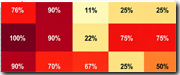
Asian seabass (Lates calcarifer) is one of the most commercially important fish species because of its rapid growth and tolerance to a wide range of salinities. However, bacterial diseases remain a major constraint to sustainable production, and the virulence and antimicrobial resistance status of associated bacterial pathogens in freshwater farming systems remain poorly characterized. This study aimed to identify bacterial isolates from freshwater-farmed Asian seabass and evaluate their virulence potential and antibiotic resistance status for pathogenic risk assessment. Diseased fish were collected from freshwater farms across four Indian states, and the bacterial isolates were characterized using biochemical tests and 16S rRNA gene sequencing. Aeromonas (42%), Vibrio (20%) and Plesiomonas (18%) were the most predominant genera, with Aeromonas veronii comprising 22% of identified isolates. Gelatinase was the most prevalent trait (100% in Aeromonas, 90% in Vibrio), followed by DNase (90% and 70%), amylase (76% and 90%) and hemolytic activity (86% and 70%), respectively. PCR detected act (95%) and aerA (38%) genes in Aeromonas, hlyA and rtxA (90%) in Vibrio, while all Plesiomonas isolates carried astA and aphA. Mean virulence scores were highest for Vibrio (5.60) and Aeromonas (5.57). Multiple antibiotic resistance (MAR) index analysis revealed that 71.4% of Aeromonas isolates exceeded the 0.2, and several Aeromonas isolates exhibited high virulence scores and elevated MAR indices. The isolation of Vibrio cholerae from food fish highlights an additional ‘one health’ concern. These findings underscore the need for integrated pathogen monitoring, prudent antimicrobial use and robust biosecurity practices in freshwater Asian seabass aquaculture.
Downloads
References
Abdulateef SA, Owaif HAA, Hussein MH (2023) Importance of virulence factors in bacterial pathogenicity: a review. International Journal of Medical Science and Clinical Research Studies 3(4): 765–769.
AVMA (2020) AVMA guidelines for the euthanasia of animals. American Veterinary Medical Association, Schaumburg, IL, USA.
Awate S, Mubarka S, Huber RG (2023) Whole genomic characterization of Streptococcus iniae isolates from Barramundi (Lates calcarifer) and preliminary evidence of cross-protective immunization. Vaccines 11(9): 1443.
Bahador A, Farshadzadeh Z, Raoofian R, Mokhtaran M, Pourakbari B, … Hashemi FB (2018) Association of virulence gene expression with colistin-resistance in Acinetobacter baumannii: analysis of genotype, antimicrobial susceptibility, and biofilm formation. Annals of Clinical Microbiology and Antimicrobials 17(1): 24.
Casadevall A, Pirofski L (2003) The damage-response framework of microbial pathogenesis. Nature Reviews Microbiology 1(1): 17–24.
Chachaty E, Saulnier P (2000) Isolating chromosomal DNA from Bacteria. In: The Nucleic Acid Protocols Handbook. Humana Press, Totowa, NJ, pp 29–32.
CLSI (2016) Methods for antimicrobial dilution and disk susceptibility testing of infrequently isolated or fastidious bacteria (Version CLSI guideline M45, 3rd edition).
dela Cruz TEE, Torres JMO (2012) Gelatin hydrolysis test protocol. American Society for Microbiology 1: 1–10.
Detcharoen M, Khrueakaew P, Benjakul S, Romyasamit C, Suyapoh W, Saetang J (2025) Surveillance of antimicrobial resistance in the Asian seabass (Lates calcarifer) supply chain using nanopore sequencing. Foods 14(10): 1691.
Devi MS, Paria P, Kumar V, Parida PK, Maurye P, ... Das BK (2022) Molecular identification and pathogenicity study of virulent Vibrio cholerae non O1/O139 serotype associated with mortality of farmed Labeo rohita (Hamilton, 1822), in India. Aquaculture 547(1): 737529.
El-baz R, Rizk DE, Barwa R, Hassan R (2016) Virulence factors profile of Staphylococcus aureus isolated from different clinical sources. Egyptian Journal of Microbiology 43: 126–144.
Fabres-Klein MH, Caizer Santos MJ, Contelli Klein R, Nunes De Souza G, De Oliveira Barros Ribon A (2015) An association between milk and slime increases biofilm production by bovine Staphylococcus aureus. BMC Veterinary Research 11(1): 3.
FAO (2022) The state of world fisheries and aquaculture 2022. Food and Agriculture Organization, Rome, Italy.
FAO (2026) The state of world fisheries and aquaculture 2026. Food and Agriculture Organization, Rome, Italy.
Ghosh S (2019) Farming of Asian seabass Lates calcarifer in freshwater impoundments in West Bengal, India. Aquaculture Asia 23(3): 1–9.
Gomes MP (2024) The convergence of antibiotic contamination, resistance, and climate dynamics in freshwater ecosystems. Water 16(18): 2606.
Gumasta R, Nawange SR, Singh SM, Garg A, Sethi R, Yadu R (2019) Extracellular protease and DNase activities in clinical and environmental isolates of Cryptococcus neoformans species complex from central India. Journal of Drug Delivery and Therapeutics 9(4-A): 328–333.
Hudzicki J (2009) Kirby-Bauer disk diffusion susceptibility test protocol. American Society for Microbiology 15(1): 1–23.
Hutson KS (2013) Infectious diseases of Asian seabass and health management. Biology and Culture of Asian Seabass Lates calcarifer. CRC Press, Taylor and Francis Group, USA, 102–136.
Irshath AA, Rajan AP, Vimal S, Prabhakaran VS, Ganesan R (2023) Bacterial pathogenesis in various fish diseases: recent advances and specific challenges in vaccine development. Vaccines 11(2): 470.
Kanchanopas-Barnette P, Labella A, Alonso CM, Manchado M, Castro D, Borrego JJ (2009) The first isolation of Photobacterium damselae subsp. damselae from Asian seabass Lates calcarifer. Fish Pathology 44(1): 47–50.
Kathirkaman P, Ayyaru G, Serelathan MV, Singaravel V, Gunasekaran T (2018) Innate immunological responses of Asian sea bass, Lates calcarifer (Bloch, 1790) for experimentally challenged Aeromonas hydrophila infection. Comparative Clinical Pathology 27(4): 927–931.
Kerddee P, Dong HT, Chokmangmeepisarn P, Rodkhum C, Srisapoome P, … Kayansamruaj P (2020) Simultaneous detection of scale drop disease virus and Flavobacterium columnare from diseased freshwater-reared barramundi Lates calcarifer. Diseases of Aquatic Organisms 140: 119–128.
Krupesha Sharma SR, Rathore G, Verma DK, Sadhu N, Philipose KK (2012) Vibrio alginolyticus infection in Asian seabass (Lates calcarifer, Bloch) reared in open sea floating cages in India. Aquaculture Research 44(1): 86–92.
Lehman D (2005) Triple sugar iron agar protocols. American Society for Microbiology, Washington, DC. pp. 1–7.
MacWilliams MP (2009a) Citrate test protocol. American Society for Microbiology, Washington, DC. pp. 1–7.
MacWilliams MP (2009b) Indole Test Protocol. American Society for Microbiology, Washington, DC. pp. 1–9.
Mishra SS, Rakesh D, Dhiman M, Choudhary P, Debbarma J, … Swain P (2017) Present status of fish disease management in freshwater aquaculture in India: state-of-the-art-review. Journal of Aquaculture and Fisheries 1(003): 14.
MPEDA (2023) Annual report 2022–23. Marine Products Export Development Authority, Kochi, India.
Munilkumar S, Sundaray JK, Bhatacharya SB, Devi GA (2013) Biology and fisheries of some brackishwater food fishes of India. Advances in Fish Research 6: 187–157.
Mursalim MF, Budiyansah H, Raharjo HM, Debnath PP, Sakulworakan R, … Rodkhum C (2022) Diversity and antimicrobial susceptibility profiles of Aeromonas spp. isolated from diseased freshwater fishes in Thailand. Journal of Fish Diseases 45(8): 1149–1163.
Nagar V, Ansari F, Vaiyapuri M, Joseph TC (2025) Virulent and multidrug-resistant Aeromonas in aquatic environments of Kerala, India: potential risks to fish and humans. Brazilian Journal of Microbiology 56(1): 303–311.
Nawaz M, Khan SA, Khan AA, Sung K, Tran Q, … Steele R (2010) Detection and characterization of virulence genes and integrons in Aeromonas veronii isolated from catfish. Food Microbiology 27(3): 327–331.
Nimisha P, Moksha S, Gangawane AK (2019) Amylase activity of a starch degrading bacteria isolated from soil. International Journal of Current Microbiology and Applied Sciences 8(4): 659–671.
Orbán L, Shen X, Phua N, Varga L (2021) Toward genome-based selection in Asian seabass: What can we learn from other food fishes and farm animals? Frontiers in Genetics 12: 506754.
Pemberton JM, Kidd SP, Schmidt R (1997) Secreted enzymes of Aeromonas. FEMS Microbiology Letters 152(1): 1–10.
Qian Q, Chen Z, Xu J, Zhu Y, Xu W, … Zhang X (2023) Pathogenicity of Plesiomonas shigelloides causing mass mortalities of largemouth bass (Micropterus salmoides) and its induced host immune response. Fish and Shellfish Immunology 132: 108487.
R Core Team (2025) R: A language and environment for statistical computing. R Foundation for Statistical Computing, Vienna, Austria. https://www.R-project.org/
Rathinam RB, Banu H, Ghode GS, Bhushan S, Bhuvaneswari R, Tripathi G (2021) High prevalence of Aeromonas and Pseudomonas infections among cage cultured Pangas catfish from the reservoirs of Maharashtra, India. Israeli Journal of Aquaculture-Bamidgeh 73: 1–18.
Rehulka J, Petras P, Marejkova M, Aldova E (2015) Vibrio cholerae non-O1/non-O139 infection in fish in the Czech Republic. Veterinární Medicína 60(1): 16–22.
Sahu I, Das BK, Marhual NP, Pradhan J, Sahoo DR, … Mishra BK (2012) Phenotypic and genotypic methods for identifications of Aeromonas hydrophila strains from carp Labeo rohita and their virulence study. International Journal of Fisheries and Aquaculture Sciences 2: 141–156.
Salerno A, Čižnár I, Krovacek K, Conte M, Dumontet S, ... Pasquale V (2010) Phenotypic characterization and putative virulence factors of human, animal and environmental isolates of Plesiomonas shigelloides. Folia Microbiologica 55(6): 641–647.
Sandeep P, Chamundeswari DB, Kumar KP (2016) Present status of parasitic and bacterial diseases in fresh water fish seed farms in East Godavari District, Andhra Pradesh. International Journal of Applied and Pure Science and Agriculture 2: 117–121.
Sandhu R, Dahiya S, Sayal P (2016) Evaluation of multiple antibiotic resistance (MAR) index and Doxycycline susceptibility of Acinetobacter species among inpatients. Indian Journal of Microbiology Research 3(3): 299.
Sarkar SL, Hossain I, Monika SA, Sanyal SK, Roy PC, … Jahid IK (2020) Probiotic potential of Pediococcus acidilactici and Enterococcus faecium isolated from indigenous yogurt and raw goat milk. Microbiology and Biotechnology Letters 48(3): 276–286.
Sen K, Rodgers M (2004) Distribution of six virulence factors in Aeromonas species isolated from US drinking water utilities: a PCR identification. Journal of Applied Microbiology 97(5): 1077–1086.
Shrivastava Y, Tripathi G, Rathinam RB, Sahoo AK, Sheikh S (2026) Phenotypic antimicrobial resistance traits of Aeromonas isolated from freshwater-farmed Asian seabass, Lates calcarifer. International Journal of Advanced Biochemistry Research 10(1): 1278–1284.
Too E, Masila E (2024) Virulence factors, biofilm formation, and horizontal gene. Enterococcus: unveiling the emergence of a potent pathogen. IntechOpen, London, UK. 91 pp.
Wang G, Clark CG, Liu C, Pucknell C, Munro CK, … Rodgers FG (2003) Detection and characterization of the hemolysin genes in Aeromonas hydrophila and Aeromonas sobria by multiplex PCR. Journal of Clinical Microbiology 41(3): 1048–1054.
Wendt M, De Silva BC, Heo GJ (2017) Virulence factors and antimicrobial resistance of Pseudomonas aeruginosa isolated from pet turtles. Asian Journal of Animal and Veterinary Advances 12(4): 205–211.
Xu J, Moore JE, Murphy PG, Millar BC, Elborn JS (2004) Early detection of Pseudomonas aeruginosa – comparison of conventional versus molecular (PCR) detection directly from adult patients with cystic fibrosis (CF). Annals of Clinical Microbiology and Antimicrobials 3(1): 21.
Yeom SJ, Yang J, Yoon KN, Kim SS, Cho MJ, … Kim JK (2026) Safety and next-generation probiotic potential of Mitsuokella multacida AGMB01124 newly isolated from healthy swine feces. Probiotics and Antimicrobial Proteins. DOI: 10.1007/s12602-026-10925-y.
Downloads
Additional Files
Published
Data Availability Statement
Data are contained within the article and supplementary materials.
Issue
Section
License
Copyright (c) 2026 Yashwee Shrivastava, Gayatri Tripathi, Rajesh Bharathi Rathinam, Megha Kadam Bedekar, Arpit Acharya, Amulya Shirivanthe Girish

This work is licensed under a Creative Commons Attribution-NonCommercial-ShareAlike 4.0 International License.