
Environmental controls on zooplankton community composition across the Bangladesh coast: integrating hydrochemistry, multivariate ordination, and threshold indicator analysis
DOI:
https://doi.org/10.17017/j.fish.1452Keywords:
coastal ecosystems, estuarine ecology, salinity gradient, TITAN, zooplankton bioindicatorAbstract
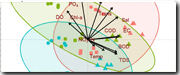
Understanding the impact of hydrochemical variability on zooplankton communities is fundamental for assessing the ecological status of coastal ecosystems. This study investigated how seasonal and spatial hydrochemical conditions shaped zooplankton communities across three contrasting coastal ecosystems of Bangladesh using multivariate approaches and threshold indicator taxa analysis (TITAN). Hydrochemical variables exhibited strong significant seasonal and spatial variations (p < 0.05). Salinity, electrical conductivity, transparency, and pH were higher in pre-monsoon, whereas phosphate, nitrate, chlorophyll-a, and dissolved oxygen were higher in post-monsoon. A total of 42 zooplankton genera belonging to four major taxonomic groups were identified, where a subclass of small crustaceans within the phylum Arthropoda such as Copepoda was the dominating group (42.4–52.7%) of zooplankton throughout the study periods. Zooplankton abundance, species richness, and diversity were significantly higher in the western and central coastal zones than in the eastern coastal zone, with abundance reaching 320±24.6 individuals L⁻¹ during the post-monsoon. Redundancy analysis (RDA) identified TDS, chlorophyll-a, COD, temperature, DO, and salinity as significant environmental correlates of zooplankton community composition, with the first two canonical axes accounting for 94.83% of the constrained variation. Comparative TITAN analyses identified community thresholds along salinity, TDS, EC, and pH gradients, with the salinity response showing a distinct ecological transition between approximately 8.9 and 13.9 ppt. These findings highlight the association of salinity with zooplankton distribution across the Bangladesh coast and provide a quantitative ecological threshold that can support long-term biomonitoring, biodiversity conservation, and adaptive coastal ecosystem management.
Downloads
References
Abdullah Al M, Akhtar A, Rahman MF, AftabUddin S, Modeo L (2020) Temporal distribution of zooplankton communities in coastal waters of the northern Bay of Bengal, Bangladesh. Regional Studies in Marine Science 34: 100993.
APHA (2017) Standard methods for the examination of water and wastewater (23rd ed.) American Public Health Association, Washington, DC.
Baker ME, King RS (2010) A new method for detecting and interpreting biodiversity and ecological community thresholds. Methods in Ecology and Evolution 1(1): 25–37.
Bhattacharjee S, Ghosh PK, Bhattacharyya A, Ghosh P, Meddya RK, … Mukherjee A (2025) Zooplankton distribution and its associated hydrology across Indian Sundarbans over the last decade: insights from current trends and future directions. Environmental Monitoring and Assessment 197(2): 217.
Bhattacharya BD, Hwang JS, Sarkar SK, Rakhsit D, Tseng LC (2015) Community structure of mesozooplankton in coastal waters of Sundarban mangrove wetland, India: a multivariate approach. Journal of Marine Systems 141(2): 112–121.
Bouquet JM, Troedsson C, Novac A, Reeve M, Lechtenbörger AK, …Thompson EM (2018) Increased fitness of a key appendicularian zooplankton species under warmer, acidified seawater conditions. PLoS One 13(1): e0190625.
Calvin K, Dasgupta D, Krinner G, Mukherji A, Thorne PW, … Orendain DJ (2023) Climate change 2023: synthesis report. Contribution of working groups I, II and III to the sixth assessment report of the intergovernmental panel on climate change. IPCC, Geneva, Switzerland.
Camatti E, Acri F, De Lazzari A, Nurra N, Pansera M, … Bergamasco A (2023) Natural or anthropogenic variability? A long-term pattern of the zooplankton communities in an ever-changing transitional ecosystem. Frontiers in Marine Science 10: 1176829.
Cloern JE, Foster SQ, Kleckner AE (2014) Phytoplankton primary production in the world's estuarine-coastal ecosystems. Biogeosciences 11(9): 2477–2501.
Cloern JE, Jassby AD, Schraga TS, Nejad E, Martin C (2017) Ecosystem variability along the estuarine salinity gradient: examples from long-term study of San Francisco Bay. Limnology and Oceanography 62(S1): S272–S291.
Conway DV (2012) Marine zooplankton of southern Britain. Part 2: Arachnida, Pycnogonida, Cladocera, Facetotecta, Cirripedia and Copepoda. Occasional Publication of the Marine Biological Association No. 26. Marine Biological Association, Plymouth. 163 pp.
Conway DV, White RG, Hugues-Dit-Ciles J, Gallienne CP, Robins DB (2003) Guide to the coastal and surface zooplankton of the south-western Indian ocean. Marine Biological Association of the United Kingdom, Plymouth.
de Lima DEPC, Pessanha ALM (2024) Changes in the food selectivity of zooplanktivorous fishes related to the effects of nutrient enrichment in an urban tropical estuary. Marine Pollution Bulletin 209: 117146.
Dehingia RK, Pankaj PP, Kakati LN, Gogoi J, Chakraborty S (2026) Cladocerans and copepods as bioindicators of aquatic ecosystem health: ecological roles, anthropogenic stressors and limitations. Ecological Indicators 184: 114712.
Dildar T, Cui W, Ikhwanuddin M, Ma H (2025) Aquatic organisms in response to salinity stress: ecological impacts, adaptive mechanisms, and resilience strategies. Biology 14(6): 667.
Dorak Z, Gaygusuz Ö, Köker L, Albay M, Akcaalan R (2025) Environmental factors affecting the spatio-temporal distribution of zooplankton functional groups in a deep alkaline lake. Hydrobiologia 852(10): 2623–2643.
Ezhilarasan P, Basuri CK, Gera A, Kumaraswami M, Rao VR, Murthy MR (2021) Mesozooplankton distribution in relation to the salinity gradient in a tropical hypersaline lake. Journal of Sea Research 178: 102138.
Ezhilarasan P, Panda US, RSPR, Vijay A, Kumaraswami M, … Murthy MR (2025) Zooplankton community changes across the Coringa mangrove and adjacent waters of east coast of India: insights into habitat-specific interactions with environmental changes. Environmental Monitoring and Assessment 197(7): 826.
Goswami SC (2004) Zooplankton methodology, collection and identification: a field manual. National Institute of Oceanography, Dona Paula, Goa, India. 16 pp.
Goździejewska AM, Cymes I, Glińska-Lewczuk K (2024) Zooplankton functional diversity as a bioindicator of freshwater ecosystem health across land use gradient. Scientific Reports 14(1): 18456.
Han W, Han Q (2024) Macrobenthic indicator species: from concept to practical applications in marine ecology. Global Ecology and Conservation 55: e03262.
Hossain MS, Tihum OA, Bayzid M, Fazal MA, Siddique AB, … Kabir MA (2026) Monsoon-driven hydrographic gradients shape seasonal mesozooplankton assemblages in the Moheshkhali Channel, a subtropical estuary in Bangladesh.
Jiarui T, Zhenjun K, Dongliang L, Wei Z, Peng H, … Junjian W (2025) Environmental drivers of zooplankton in Qinzhou Bay: a monsoon-affected tropical estuarine ecosystem. Estuarine, Coastal and Shelf Science 326: 109553.
Khan MHR, Liu J, Huang Y, Rahman A, Hossen MS, … Chen Z (2025) Impact of the Holocene climate system on sediment transport and deposition in the lower Bengal Fan: insights from geochemical records. Palaeogeography, Palaeoclimatology, Palaeoecology 676: 113126.
Kim YH, Hong S, Song YS, Lee H, Kim HC, … Khim JS (2017) Seasonal variability of estuarine dynamics due to freshwater discharge and its influence on biological productivity in Yeongsan River Estuary, Korea. Chemosphere 181: 390–399.
King RS, Baker ME (2010) Considerations for analyzing ecological community thresholds in response to anthropogenic environmental gradients. Journal of the North American Benthological Society 29(3): 998–1008.
Krishna MS, Prasad MHK, Rao DB, Viswanadham R, Sarma VVSS, Reddy NPC (2016) Export of dissolved inorganic nutrients to the northern Indian ocean from the Indian monsoonal rivers during discharge period. Geochimica et Cosmochimica Acta 172: 430–443.
Liu Q, Mutethya E, Yongo E, Liu X, Ye C, … Guo Z (2025) Spatio-temporal dynamics of phytoplankton community structure in response to environmental drivers in Xiaohai Lagoon, Hainan Island, China. Water 18(1): 51.
Mantovano T, Braghin LDSM, Schwind LT, Tiburcio VG, Bonecker CC, Lansac-Tôha FA (2019) Zooplankton communities show contrasting productivity variables thresholds in dammed and undammed systems. Limnetica 38(2): 669–682.
Margalef R (1958) Temporal succession and spatial heterogeneity in natural phytoplankton. In: Buzzati-Traverso AA (Eds) Perspectives in Marine Biology. University of California Press, Berkeley, pp 323–347.
Martin JW, Davis GE (2001) An updated classification of the recent crustacea. Natural History Museum of Los Angeles County, Science Series 39: 1–124.
Mauchline J (1998) The Biology of Calanoid Copepods. Advances in Marine Biology, Vol. 33. Academic Press, San Diego.
McKenzie M, Brooks A, Callisto M, Collins AL, Durkota JM, … Mathers KL (2024) Freshwater invertebrate responses to fine sediment stress: a multi-continent perspective. Global Change Biology 30(1): e17084.
Modéran J, Bouvais P, David V, Le Noc S, Simon-Bouhet B, … Fichet D (2010) Zooplankton community structure in a highly turbid environment (Charente Estuary, France): spatio-temporal patterns and environmental control. Estuarine, Coastal and Shelf Science 88(2): 219–232.
Monwar MM, Islam MR, Ali A, Das P, Bhuiyan MKA (2026) Monsoon-driven zooplankton dynamics in the mid-estuary of the Sangu River, Bangladesh: a multivariate approach. Limnology: 1–16.
Pielou EC (1966) The measurement of diversity in different types of biological collections. Journal of Theoretical Biology 13: 131–144.
R Core Team (2026) R: a language and environment for statistical computing. R Foundation for Statistical Computing, Vienna, Austria.
Rahaman SMB, Sarder L, Rahaman MS, Ghosh AK, Biswas SK, … Islam SS (2013) Nutrient dynamics in the Sundarbans mangrove estuarine system of Bangladesh under different weather and tidal cycles. Ecological Processes 2(1): 29.
Rahman MH, Chen T, Yeasmin SM, Khan MHR, Chakraborty TK, … Rahman MA (2024) Receptor model-based sources and risk assessment of metals in sediment of the coastal construction-oriented aquatic system in Bangladesh. Marine Pollution Bulletin 202: 116383.
Rahman MH, Chen T, Yeasmin SM, Lin Y, Zhao J, … Khan MHR (2025) Decadal variability and anthropogenic influence on trace element dynamics in the Bay of Bengal: evidence from high-resolution coral records. Environmental Research 279: 121828.
Rahman MH, Chen T, Yeasmin SM, Tan X, Khan MHR (2026) Coral geochemical archives reveal shipbreaking-driven heavy metal pollution in the Bay of Bengal. Marine Pollution Bulletin 222: 118888.
Ratnarajah L, Abu-Alhaija R, Atkinson A, Batten S, Bax NJ, … Yebra L (2023) Monitoring and modelling marine zooplankton in a changing climate. Nature Communications 14(1): 564.
Raulo S, Baliarsingh SK, Samanta A, Lotliker AA, Joseph S, … Nair TB (2026) Hydrochemical budgeting of a tropical estuary vis-à-vis tidal dynamics: Ecosystem trophic status assessment. Journal of Marine Systems 256: 104247.
Rollwagen-Bollens G, Bollens S, Dexter E, Cordell J (2020) Biotic vs. abiotic forcing on plankton assemblages varies with season and size class in a large temperate estuary. Journal of Plankton Research 42(2): 221–237.
Röthig T, Trevathan-Tackett SM, Voolstra CR, Ross C, Chaffron S, … Sweet M (2023) Human-induced salinity changes impact marine organisms and ecosystems. Global Change Biology 29(17): 4731–4749.
Segers H (2008) Global diversity of rotifers (Rotifera) in freshwater. Hydrobiologia 595(1): 49–59.
Shaha DC, Hasan J, Kundu SR, Yusoff FM, Salam MA, … Wahab MA (2022) Dominant phytoplankton groups as the major source of polyunsaturated fatty acids for hilsa (Tenualosa ilisha) in the Meghna Estuary, Bangladesh. Scientific Reports 12(1): 20980.
Shannon CE, Weaver W (1949) The mathematical theory of communication. Urbana, IL: The University of Illinois Press, 1–117.
Sultana A, Jewel MAS, Ara J, Das PS, Haque MA (2026) Monsoon-driven hydrological disturbance restructures zooplankton communities and overrides spatial gradients in tropical estuaries. Ecohydrology and Hydrobiology 26(2): 100751.
Sultana A, Jewel MAS, Haque MA (2026) Seasonal shifts in zooplankton functional feeding modes across the monsoon cycle in a tropical estuary. Limnologica 118: 126333.
Telesh IV, Khlebovich VV (2010) Principal processes within the estuarine salinity gradient: a review. Marine Pollution Bulletin 61(4–6): 149–155.
ter Braak CJF, Šmilauer P (2012) Canoco reference manual and user's guide: software for ordination (Version 5.0). Biometris, Wageningen.
Turner JT (2004) The importance of small planktonic copepods and their roles in pelagic marine food webs. Zoological Studies 43(2): 255–266.
Venkataramana V, Gawade L, Bharathi MD, Sarma VVSS (2023) Role of salinity on zooplankton assemblages in the tropical Indian estuaries during post monsoon. Marine Pollution Bulletin 190: 114816.
Vinayachandran PN, Seng DC, Schmid FA (2022) Climate change and coastal systems. In: Blue Economy: An Ocean Science Perspective. Springer Nature, Singapore, pp 341–377.
Yeasmin SM, Luo C, Rahman H, Woalid ST, Rahman A, … Kawsar A (2026) Heavy metal sources and associated ecological and human health risks in coastal islands of the Ganges–Brahmaputra–Meghna delta, Bangladesh. Environmental Chemistry and Ecotoxicology 8: 112–126.
Zeng L, Yu C, Fang H, Zhang Z, Gu Y, … Du H (2025) Differential responses of phytoplankton and zooplankton communities to tidal and urban stressors in the Dongjiang River: from biodiversity patterns to network stability. Ecotoxicology and Environmental Safety 303: 118930.
Zhang Z, Li H, Shen W, Du X, Li S, … Deng Y (2022) The large-scale spatial patterns of ecological networks between phytoplankton and zooplankton in coastal marine ecosystems. Science of the Total Environment 827: 154285.
Zhao K, Song K, Pan Y, Wang L, Da L, Wang Q (2017) Metacommunity structure of zooplankton in river networks: roles of environmental and spatial factors. Ecological Indicators 73: 96–104.
Downloads
Additional Files
Published
Data Availability Statement
The data that support the findings of this study are avail-able on a reasonable request from the corresponding author.
Issue
Section
License
Copyright (c) 2026 Syeda Maksuda Yeasmin, Md Habibur Rahman, Mamun Abdullah Al, Md. Abu Kawsar, Syed Tanvir Woalid, Rion Islam Fardin, Md. Hasan

This work is licensed under a Creative Commons Attribution-NonCommercial-ShareAlike 4.0 International License.