
Acute hepatopancreatic necrosis disease in black tiger shrimp: evidence from the 2018 Bangladesh outbreak
DOI:
https://doi.org/10.17017/j.fish.1282Keywords:
acute hepatopancreatic necrosis, AP4 nested PCR, Penaeus monodon, pirAB, putative VpAHPNDAbstract
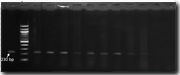
Acute hepatopancreatic necrosis disease (AHPND), formerly known as early mortality syndrome, is a major threat to shrimp aquaculture. We investigated a mortality event affecting black tiger shrimp (Penaeus monodon) in southern Bangladesh in 2018. Hepatopancreatic tissues from 248 moribund shrimp, collected from 39 grow-out ponds on 31 farms, were examined by AP4 nested PCR, microbiological culture, phenotypic characterization, 16S rRNA gene sequencing of representative isolate MKD03, and challenge bioassays. The AHPND-associated AP4 target was detected in 168 of 248 shrimp (67.7%); at least one AP4-positive shrimp was found in 74.4% ponds and 74.2% farms. Six presumptive Vibrio isolates were AP4-positive. Isolate MKD03 showed 99% 16S rRNA sequence similarity to Vibrio parahaemolyticus, supporting its provisional taxonomic placement. Challenge with MKD03 produced 60% and 90% mortality in Artemia nauplii at 24 and 48 hr, respectively, and 94% mortality in P. monodon post-larvae at 24 hr; mortality remained substantially lower in unchallenged controls. Recovery of AP4-positive bacteria from challenged post-larvae further supported the association with the outbreak. Because histopathology and species-specific or multilocus confirmation were not performed, these findings support, but do not definitively establish, the involvement of a putative V. parahaemolyticus AHPND isolate in the 2018 event. The study provides outbreak-specific baseline evidence for targeted surveillance, biosecurity, and preparedness in Bangladesh shrimp aquaculture.
Downloads
References
Dangtip S, Sirikharin R, Sanguanrut P, Thitamadee S, Sritunyalucksana K, … Flegel TW (2015) AP4 method for two-tube nested PCR detection of AHPND isolates of Vibrio parahaemolyticus. Aquaculture Reports 2: 158–162.
Eshik MME, Abedin MM, Punom NJ, Begum MK, Rahman MS (2018) Molecular Identification of AHPND Positive Vibrio Parahaemolyticus causing an outbreak in south-west shrimp farming regions of Bangladesh. Journal of Bangladesh Academy of Science 41(2): 127–135.
Flegel TW (2006) Detection of major penaeid shrimp viruses in Asia, a historical perspective with emphasis on Thailand. Aquaculture 258: 1–33.
Frank JA, Reich CI, Sharma S, Weisbaum JS, Wilson BA, Olsen GJ (2008) Critical evaluation of two primers commonly used for amplification of bacterial 16S rRNA genes. Applied and Environmental Microbiology 74(8): 2461–2470.
Gomez-gil B, Soto-rodríguez S, Lozano R, Betancourt-lozano M (2014) Draft genome sequence of Vibrio parahaemolyticus strain M0605, which causes severe mortalities of shrimps in Mexico. Genome Announcements 2(2): 10.1128/genomea.00055-14.
Hong X, Lu L, Xu D (2016) Progress in research on acute hepatopancreatic necrosis disease (AHPND). Aquaculture International 24(2): 577–593.
Hossain FE, Ramim AM, Rahman MS, Faruque AMO, Naser MN, Karim MM (2017) Identification of bacterial agents causing mortality in postlarvae of giant freshwater prawn (Macrobrachium rosenbergii) in south-west coastal districts of Bangladesh. Aquaculture Research 48: 3545–3555.
Hossain S, Otta SK, Chakraborty A, Kumar HS, Karunasagar I, Karunasagar I (2004) Detection of WSSV in cultured shrimps, captured brooders, shrimp postlarvae and water samples in Bangladesh by PCR using different primers. Aquaculture 237(1–4): 59–71.
Intriago P, Medina A, Cercado N, Arteaga K, Montenegro A, … Flegel T (2024) Passive surveillance for shrimp pathogens in Penaeus vannamei submitted from 3 regions of Latin America. Aquaculture Reports 36: 102092.
Jones JL, Lüdeke CHM, Bowers JC, Garrett N, Fischer M, … DePaola A (2012) Biochemical, serological, and virulence characterization of clinical and oyster Vibrio parahaemolyticus isolates. Journal of Clinical Microbiology 50(7): 2343–2352.
Joshi J, Srisala J, Truong VH, Chen I-T, Nuangsaeng B, … Thitamadee S (2014) Variation in Vibrio parahaemolyticus isolates from a single Thai shrimp farm experiencing an outbreak of acute hepatopancreatic necrosis disease (AHPND). Aquaculture 428–429: 297–302.
Kim YB, Okuda J, Matsumoto C, Takahashi N, Hashimoto S, Nishibuchi M (1999) Identification of Vibrio parahaemolyticus strains at the species level by PCR targeted to the toxR gene. Journal of Clinical Microbiology 37(4): 1173–1177.
Kumar R, Ng TH, Wang HC (2020) Acute hepatopancreatic necrosis disease in penaeid shrimp. Reviews in Aquaculture 12: 1867–1880.
Kumar V, Roy S, Behera BK, Bossier P, Das BK (2021) Acute hepatopancreatic necrosis disease (Ahpnd): virulence, pathogenesis and mitigation strategies in shrimp aquaculture. Toxins (Basel) 13(8): 1–28.
Leaño EM, Mohan CV (2012) Early mortality syndrome threatens Asia ’s shrimp farms. Global Aquaculture Advocate 15(4): 38–39.
Lightner DV, Redman R, Pantoja C, Noble B, Tran L (2012) Early mortality syndrome affects shrimp in Asia. Global Seafood Alliance 40: 2012.
Ruangpan L, Kitao T (1991) Vibrio bacteria isolated from black tiger shrimp, Penaeus monodon Fabricius. Journal of Fish Disease 14(3): 383–388.
SA Soto-Rodriguez, B Gomez-Gil, R Lozano-Olvera, M Betancourt-Lozano, Morales-Covarrubias MS (2015) Field and experimental evidence of Vibrio parahaemolyticus as the causative agent of acute hepatopancreatic necrosis disease of cultured shrimp (Litopenaeus vannamei) in northwestern Mexico. Applied and Environmental Microbiology 81(5): 1689–1699.
Saitou N, Nei M (1987) The neighbor-joining method: a new method for reconstructing phylogenetic trees. Molecular Biology and Evolution 4(4): 406–425.
Schofield PJ, Noble BL, Caro LFA, Mai HN, TJ Padilla TJ, … Dhar AK (2021) Pathogenicity of acute hepatopancreatic necrosis disease (AHPND) on the freshwater prawn, Macrobrachium rosenbergii, and Pacific white shrimp, Penaeus vannamei, at various salinities. Aquaculture Research 52: 1480–1489.
Shinn AP, Pratoomyot J, Griffiths D, Trong TQ, Vu NT, … Briggs M (2018) Asian shrimp production and the economic costs of disease. Asian Fisheries Science 31: 29–58.
Siddique AB, Moniruzzaman M, Ali S, Dewan MN, Islam MR, … Mahmud ZH (2021) Characterization of pathogenic Vibrio parahaemolyticus isolated from fish aquaculture of the southwest coastal area of Bangladesh. Frontiers in Microbiology 12: 635539.
Takemura AF, Chien DM, Polz MF (2014) Associations and dynamics of Vibrionaceae in the environment, from the genus to the population level. Frontiers in Microbiology 5: 1–26.
Tamura K, Nei M (1993) Estimation of the number of nucleotide substitutions in the control region of mitochondrial DNA in humans and chimpanzees. Molecular Biology and Evolution 10(3): 512–526.
Thompson JD, Higgins DG, Gibson TJ (1994) CLUSTAL W: Improving the sensitivity of progressive multiple sequence alignment through sequence weighting, position-specific gap penalties and weight matrix choice. Nucleic Acids Research 22(22): 4673–4680.
Tran L, Nunan L, Redman RM, Mohney LL, Pantoja CR, Fitzsimmons K (2013) Determination of the infectious nature of the agent of acute hepatopancreatic necrosis syndrome affecting penaeid shrimp. Diseases of Aquatic Organisms 105: 45–55.
Velazquez-Roman J, León-Sicairos N, de J Hernández-Díaz L, Canizalez-Roman A (2014) Pandemic Vibrio parahaemolyticus O3: K6 on the American continent. Frontiers in Cellular and Infection Microbiology 3: 110.
World Organization for Animal Health (2023) Chapter 2.2.1. Acute hepatopancreatic necrosis disease WOAH Aquatic Manual 2023: 1–14.
Downloads
Additional Files
Published
Data Availability Statement
All data relevant to this study are included within the pa-per and its Supporting Information. The partial 16S rRNA gene sequence of isolate MKD03 has been deposited in GenBank under accession number OQ780863.
Issue
Section
License
Copyright (c) 2026 Deb Jyoti Mukharjee, Samiur Rahim, Abu Mohammed Ramim, Md. Mahmud Hasan, Marufa Zerin Akhter, Shakila Nargis Khan, Muhammad Manjurul Karim

This work is licensed under a Creative Commons Attribution-NonCommercial-ShareAlike 4.0 International License.