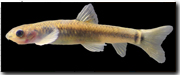
Unveiling the identity of three Parapsilorhynchus species from the Eastern Ghats: an integrative taxonomic approach
DOI:
https://doi.org/10.17017/j.fish.835Keywords:
molecular analysis, morphology, Parapsilorhynchus alluriensis, P. odishaensis, P. swaini, synonymsAbstract
The identities of Parapsilorhynchus odishaensis, Mahanadhi minnow P. swaini, and P. alluriensis have been elucidated through a comprehensive integration of morphological and molecular data, specifically utilizing mitochondrial cytochrome oxidase subunit 1 (COI) sequences. Specimens collected from the type localities of P. swaini and P. odishaensis, closely resembling their initial descriptions, underwent molecular analysis and were compared to the holotype sequence of P. alluriensis. The genetic distances (K2P) observed among these three species ranged from 0.0% to 2.1%. Notably, the K2P distance between P. swaini and P. odishaensis ranged from 0.2% to 0.3%, while between P. odishaensis and P. alluriensis (holotype) is 1%, and between P. swaini and P. alluriensis (holotype), there was a 0.7% difference. The intraspecific variations among the P. alluriensis sequences, uploaded from the nearby area of the type locality are 0.0 to 0.8%. Despite minor variations in morphological traits such as snout tubercles, anal fin black bar, and inter-orbital space, molecular analysis revealed no significant genetic differentiation among these species. These morphological variations are likely a result of habitat influences. Considering the overlapping morphological features supported by ML tree and ASAP analysis, P. odishaensis, P. alluriensis, and P. swaini (described from the Eastern Ghats) are suggested to be synonymous. As P. odishaensis was the first species described, the other two should be regarded as junior synonyms of P. odishaensis.
Downloads
References
Annandale N (1919) The fauna of certain small streams in the Bombay Presidency. v. Notes on freshwater fish mostly from the Satara and Poona districts. Records of the Indian Museum.
Baliarsingh BK, Kosygin L (2017) A new species of Parapsilorhynchus Hora 1921 (Teleostei, Cyprinidae) from Mahanadi River basin of Odisha, India. Indian Journal of Fisheries 64(4): 44–49.
Baliarsingh BK, Kosygin L, Swain SK (2017) Parapsilorhynchus odishaensis, a new cyprinid fish (Teleostei: Cyprinidae) from Odisha, India. Records of the Zoological Survey of India 117(1): 22–25.
Hasegawa M, Kishino H, Yano T (1985) Dating of the human-ape splitting by a molecular clock of mitochondrial DNA. Journal of Molecular Evolution 22(2): 160–74.
Hora SL (1921) Notes on fishes in the Indian museum. Part I. On a new genus of fish closely resembling Psilorhynchus. McClelland Records of the Indian Museum 22(1): 13–17.
Hora SL, Misra KS (1938) Fish of Deolali Journal of Bombay Natural History Society 40 (1 and 2): 20–38.
Hu L, Yao N, Wang C, Yang L, Serekbol G, … Chen S (2024) Analyses of morphological differences between geographically distinct populations of Gymnodiptychus dybowskii. Water 16(5): 755.
Jadhav SS, Karuthapandi M, Chandra K, Jaiswal D, Dinesh KP, Narahari A (2020) Parapsilorhynchus alluriensis, a new species of cyprinid fish (Teleostei: Cyprinidae) from the Eastern Ghats of India. Zootaxa.
Jayaram KC (2010) The freshwater fishes of the Indian Region, Narendra Publishing House, Delhi.
Kumar S, Stecher G, Li M, Kyanz C, Tamura K (2018) MEGA X: molecular evolutionary genetics analysis across computing platforms. Molecular Biology and Evolution 35(6): 1547–1549.
Mohapatra A, Ho HC, Acharya S, Ray D, Mishra SS (2022) A new Congrid eel, Rhynchoconger smithi sp. nov. (Anguilliformes: Congridae), from the Bay of Bengal, India. Journal of Fish Biology.
Nelson JS, Grande TC, Wilson MVH (2016) Fishes of the world. John Wiley & Sons, Hoboken, New Jersey, USA.
Singh DF (1994) Parapsilorhynchus elongatus, a new cyprinid fish from the Western Ghats, India Journal of the Bombay Natural History Society 91(2): 282–285.
Thompson JD, Gibson TJ, Higgins DG (2002) Multiple sequence alignment using ClustalW and ClustalX. Current Protocols in Bioinformatics.
Ward RD, Zemlak TS, Innes BH, Last P, Hebert, PDN (2005) DNA barcoding Australia's fish species. Philosophical Transactions of the Royal Society B: Biological Sciences.